
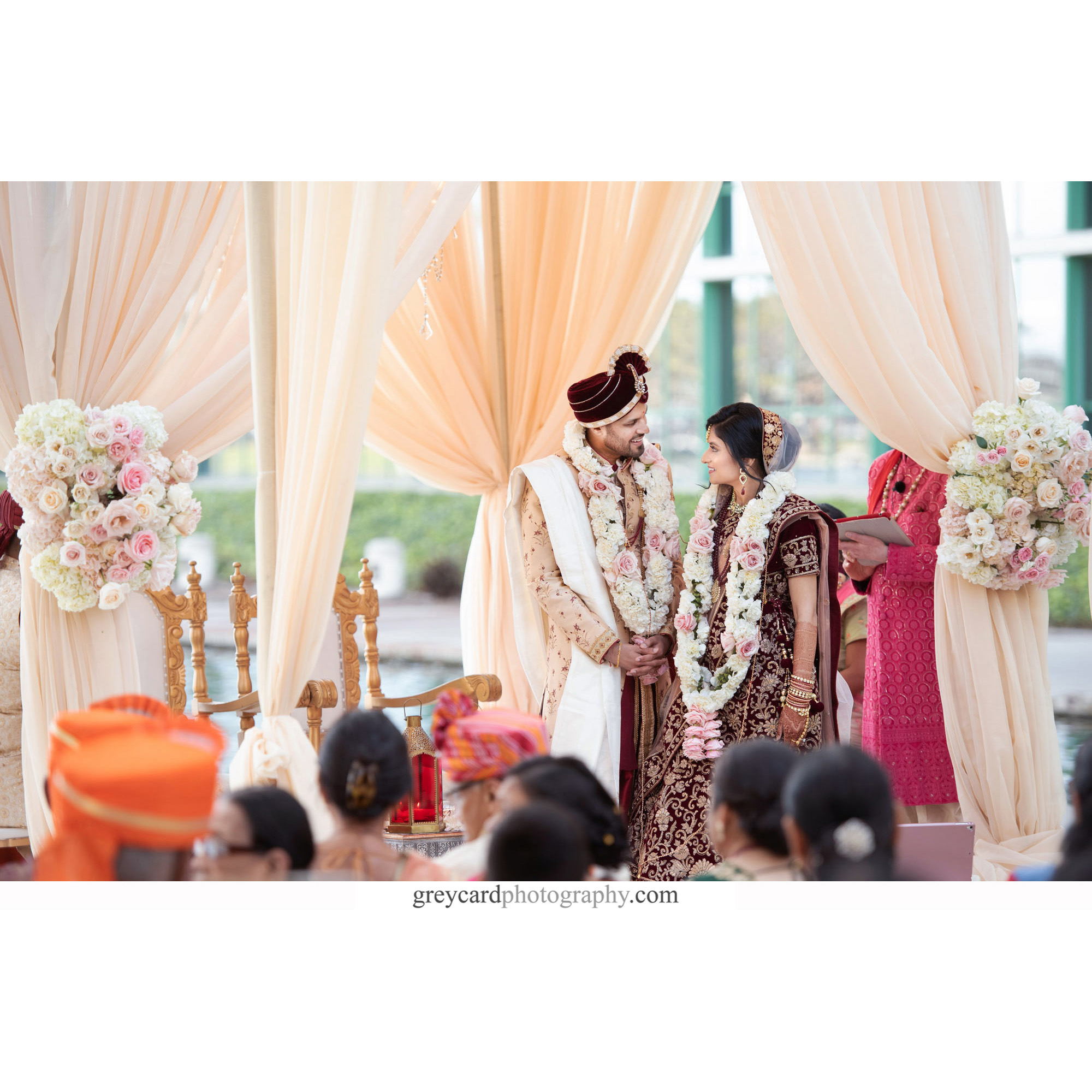
Here’s what most people don’t realize about Indian weddings until they’re in the thick of planning one: these aren’t just weddings. They’re multi-day celebrations that tell a story across different events, each with its own mood, its own purpose, and yeah, its own design requirements.
At 2Create Designs, we’ve had the privilege of designing South Asian weddings throughout Orange County for years now. And if there’s one thing we’ve learned, it’s that these celebrations demand a completely different design approach than your standard single-day Western wedding. The scale, the color, the cultural significance woven into every element? It requires both technical expertise and deep respect for tradition.
Based here in Anaheim, CA, we serve families across Southern California who are looking to create weddings that honor their heritage while feeling fresh and personal. Let’s talk about what that actually looks like.
The Multi-Event Challenge (And Opportunity)
Most Indian weddings we design span at least three major events, sometimes more. You’ve got the Mehndi, the Sangeet, the ceremony itself, and the reception. Some families add welcome parties, after-parties, separate religious ceremonies. Each one needs to feel distinct while still belonging to the same celebration.
This is where a lot of design teams stumble. They either make everything look identical (boring), or they go so different across events that there’s zero continuity (confusing). The sweet spot? Creating a design language that carries through with variation.
Think of it like chapters in a book. Different scenes, different tones, but you can tell they’re part of the same story.
Mehndi typically wants a bright, vibrant, daytime vibe. We often incorporate lots of textiles, floor seating options, and bold marigold installations. It’s celebratory but relaxed, intimate even when guest counts are high.
Sangeet is where things get theatrical. This is your party night: music, dancing, performances. Lighting becomes crucial here. We create dynamic environments that can shift from performance mode to dance party seamlessly. Statement florals, dramatic draping, maybe some unexpected modern elements mixed with traditional touches.
Ceremony day is when the mandap takes center stage. Everything else in the design supports and enhances that focal point. The ceremony is sacred, so the design needs to reflect that gravity while still being visually stunning.
Reception often calls for elegance and sophistication. After the emotional intensity of the ceremony, families usually want something that feels celebratory but also allows for conversation, dining, and yes, more dancing.
Learn More: Indian Wedding Design and Planning in Southern California
The Mandap: Getting This Right Matters
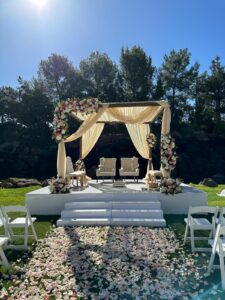 Let’s be honest about mandaps for a second. This isn’t just another ceremony backdrop. This is where one of the most significant moments of the entire celebration happens. The mandap design needs to honor that.
We’ve designed mandaps using traditional marigold garlands that create this incredible golden canopy effect. We’ve created contemporary structures with cascading orchids and roses in jewel tones. We’ve worked with families who wanted something minimal and architectural, letting the structure itself be the statement.
What matters most? Understanding what the mandap represents for your family and making sure the design reflects that significance.
Structural considerations are real. Many Orange County venues weren’t built with mandaps in mind. We need to think about weight load if we’re doing an elaborate floral installation, sight lines for guests (everyone needs to see the ceremony), how it photographs from multiple angles, and honestly, Southern California weather if you’re outdoors.
The floral choices dramatically impact the overall effect. Marigolds are traditional, affordable, and they photograph beautifully with their saturated color. Roses and orchids bring elegance and can handle heat better than you’d think. We often mix elements, maybe a traditional marigold base with modern floral accents that tie into your overall color story.
One thing we always advise: invest in your mandap design. If you’re working with budget constraints (and most people are), this is where you splurge. Guest table florals can be simpler, lounge areas can use more rental furniture than flowers, but your mandap should be breathtaking.
Color: Going Bold in Southern California
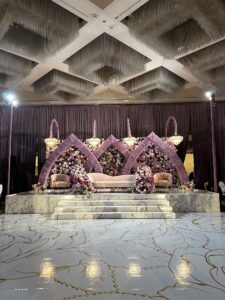 Indian weddings give us permission to use color in ways that would overwhelm other celebrations. And honestly? It’s liberating.
Traditional palettes lean heavily on reds, golds, oranges, deep pinks—colors that carry cultural significance and photograph incredibly well. Modern couples are expanding beyond traditional boundaries, bringing in jewel tones, incorporating unexpected color combinations, sometimes even working with softer palettes that still feel vibrant.
Here’s where it gets interesting though: color behaves differently depending on your venue and lighting. That deep red that looks stunning in photos from other weddings might read almost black in a dimly lit ballroom. Conversely, bright oranges and marigolds under harsh afternoon sun can photograph almost neon.
We think through color application across your entire event arc. Maybe your Mehndi is bright yellows and oranges, your Sangeet shifts into deeper jewel tones, and your ceremony introduces richer reds and golds. The progression tells a story.
Pro tip from years of experience: Don’t try to incorporate every significant color equally. Choose 2-3 dominant colors and let others appear as accents. Your design will feel more cohesive and less chaotic.
Strategic Floral Planning Across Multiple Days
Here’s the reality of floral budgets for Indian weddings: you’re essentially designing 3-4 events’ worth of florals. That adds up fast.
Most families we work with in Orange County allocate around 50-60% of their total floral budget to ceremony day, specifically the mandap and any stage or sweetheart table designs. Another 25-30% goes to Sangeet since that’s usually the most photographed social event. The remaining budget covers Mehndi and smaller touches throughout.
But that’s just a framework. Some families prioritize differently based on what matters most to them.
Heat-resistant blooms matter in Southern California. We’re often working with outdoor or partially outdoor venues. Orchids, roses, and certain types of lilies hold up remarkably well. Delicate flowers like hydrangeas? They’ll wilt in direct sun within hours. We plan accordingly.
For guest tables across multiple events, we often use a mix of tall and low arrangements. Tall arrangements create impact from across the room (crucial for large venues), while low arrangements don’t block conversation. Alternating heights keeps things visually interesting without requiring massive centerpieces on every single table.
A strategy that works beautifully: Create one or two spectacular floral installations per event (mandap, stage backdrop, entrance piece) and then use strategic smaller arrangements combined with other design elements like candles, lanterns, and textiles for tables and secondary spaces.
Draping: Transforming California Venues
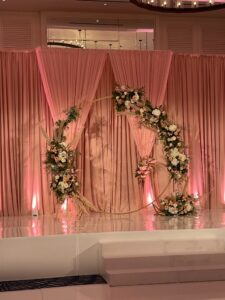 Most Orange County venues (even the nice ones) weren’t designed with Indian weddings in mind. They’ve got their standard look, which is often… fine. Just fine.
Luxurious draping changes everything.
We use fabric to create architecture where none exists. Ceiling treatments that soften ballrooms and add intimacy. Pipe and drape that defines ceremony spaces or hides less attractive venue features. Fabric backdrops that create photo moments and visual focal points.
For South Asian weddings, we often work with richer fabrics: silks, organzas, velvets depending on the season and event. The colors and textures reference traditional Indian textiles while creating a cohesive modern look.
Here’s something we do frequently: Create “rooms within rooms” using strategic draping. In a large ballroom, we might define the ceremony space with sheer draping that adds separation without blocking sight lines. For lounges or photo areas, we use draped fabric to create more intimate zones that still feel connected to the larger celebration.
The Sangeet especially benefits from dramatic draping. We can create theater-like backdrops for performances, use lighting behind sheer fabrics to create glowing effects, hang fabric from ceilings to add warmth and energy to dance floors.
Lighting That Honors the Moment
Lighting might be the single most underestimated element in Indian wedding design. People focus (understandably) on florals and mandap design, then treat lighting as an afterthought. That’s a mistake.
Ceremony lighting needs to be warm and reverent. We use uplighting on the mandap structure itself to highlight the florals and create depth. Soft overhead lighting ensures the couple’s faces are properly lit for photos without harsh shadows. If you’re incorporating traditional elements like diyas (oil lamps), we design around how that flickering light will interact with your overall lighting scheme.
For Sangeet and reception, lighting becomes more dynamic. We might use programmable uplighting that changes color throughout the event. Pin spotting on centerpieces makes your floral investment shine (literally). Dance floor lighting that responds to music. Gobo projections that can display patterns, names, or cultural motifs on floors or walls.
A specific recommendation: If you’re doing an outdoor ceremony in Southern California, plan for sunset timing. That golden hour light is unbeatable for photos, but you need supplemental lighting ready for when natural light fades. We position lighting strategically so the transition from daylight to evening feels seamless rather than jarring.
Managing Guest Experience at Scale
Indian weddings typically bring 300-500 guests, sometimes more. That’s not just a wedding, that’s a concert-sized event. Design decisions need to account for that scale while still feeling personal.
Seating arrangements require real strategy. We work with venues and planners to ensure sight lines work from all angles. For ceremonies, that often means curved or angular seating rather than traditional straight rows. For receptions, round tables create better conversation than long banquet tables, though we sometimes mix both for visual variety and space optimization.
Flow between spaces matters immensely. If ceremony and reception are in different areas, we design the transition so it feels intentional. Maybe there’s a cocktail area with its own design moment that gives guests somewhere beautiful to gather during the flip. Or we create a dramatic entrance to the reception space that signals the shift from sacred ceremony to celebration.
Comfort considerations for multi-hour events include providing enough seating in cocktail areas (people get tired standing), ensuring bars are strategically placed to avoid bottlenecks, creating quiet zones for guests who need a break from the energy, and honestly, making sure restrooms are easily accessible and ideally designed with the same attention as the main spaces.
We also think about photo opportunities beyond the obvious. Guests want to document these celebrations. Strategic design moments throughout the venue (a beautifully draped entrance, an installation with interesting textures, even thoughtfully designed cocktail areas) give people natural spots to capture memories.
Orange County Venues and Logistics
Not all venues are created equal for Indian weddings. We work extensively throughout Southern California, and certain venue types consistently deliver better experiences.
Hotel ballrooms offer the advantage of guest room blocks and experienced staff who’ve handled large events. The downside? They can feel generic without significant design intervention. This is where draping, lighting, and strategic floral placement become crucial.
Historic estates and gardens provide built-in beauty but often come with restrictions on open flames, amplified sound, or late-night events. They’re stunning for ceremonies and daytime events, though evening receptions may require significant lighting investment.
Cultural centers and temple venues understand the specific needs of South Asian celebrations but vary widely in their aesthetic and amenities. Some are gorgeous, some need substantial design help.
Warehouse and industrial spaces are having a moment. They offer blank canvases and often fewer restrictions, but they require more design investment since you’re creating everything from scratch.
For outdoor Southern California events, weather contingency planning isn’t optional. Even in our typically reliable climate, wind can be an issue (especially for draping and lightweight decor), and occasional rain happens. We always design with a backup plan that maintains the aesthetic rather than feeling like a compromise.
Setup timing is critical. Elaborate mandaps and extensive draping require substantial installation time. We typically need access to the venue at least 12-16 hours before the ceremony for complex South Asian wedding designs. Some venues accommodate this better than others.
How We Approach Indian Wedding Design
Our process for South Asian weddings starts with understanding your family’s specific traditions and what matters most to you culturally and personally. Not all Indian weddings are identical—regional differences, religious variations, and individual family traditions all influence design decisions.
We collaborate closely with your wedding planner (if you have one) and key family members to ensure we’re honoring important elements while bringing fresh design perspective. Some families want very traditional aesthetics, others are looking for contemporary interpretations, and most fall somewhere in the middle.
Timeline-wise, we typically connect with clients 6-12 months before the wedding. Multi-day celebrations require more planning than single-day events. We need time for custom mandap design, sourcing specific florals, coordinating with venues on logistical needs, and creating mock-ups so you can see and adjust elements before the actual events.
From our Anaheim location, we serve South Asian communities throughout Orange County and the broader Southern California region. From traditional celebrations in temple venues to contemporary interpretations in modern hotels, from intimate 200-person gatherings to elaborate 600+ guest productions.
Learn more about our design process.
What This Investment Creates
Indian weddings represent significant investments of time, energy, and yes, budget. The design component is substantial, but what it creates extends beyond pretty photos.
Great design honors your cultural heritage while reflecting your personal style. It creates environments where your family feels the significance of each tradition. It gives your guests experiences they’ll remember and talk about. It ensures your celebration photographs beautifully across multiple days and lighting conditions.
Most importantly, thoughtful design allows you to be present in your own celebration rather than worrying about whether everything looks right.
Ready to start planning your Indian wedding design? Contact 2Create Designs in Anaheim, CA for a consultation. We’d love to learn about your vision and create something extraordinary that honors your heritage and celebrates your future together.