
Celebrating the Rich Diversity of South Asian Wedding Traditions
Here’s something that happens pretty regularly at our Anaheim studio: a couple comes in asking about “Indian wedding design,” and within the first ten minutes of conversation, we’re talking about Punjabi traditions, or South Indian ceremony timing, or how their Pakistani and Gujarati families are blending customs.
The term “Indian wedding” has become this catch-all phrase in the United States for what’s actually an incredibly diverse range of cultural celebrations across the entire South Asian subcontinent. We’re talking about distinct regional traditions, different religious practices, varied languages, and customs that have evolved over thousands of years across what’s now India, Pakistan, Bangladesh, Sri Lanka, and Nepal.
At 2Create Designs, we’ve spent years designing celebrations for South Asian families throughout Orange County and Southern California, and if there’s one thing we’ve learned, it’s this: understanding the nuances matters. Not just for getting the design right, but for honoring what these celebrations actually represent for families.
Let’s talk about what makes South Asian weddings simultaneously unified in their approach to celebration and beautifully diverse in their specific expressions.
What Unites South Asian Celebrations
 Despite all the regional and religious variations, certain elements show up across virtually every South Asian wedding we design, regardless of whether the family is Punjabi Hindu, Pakistani Muslim, South Indian, or any other background.
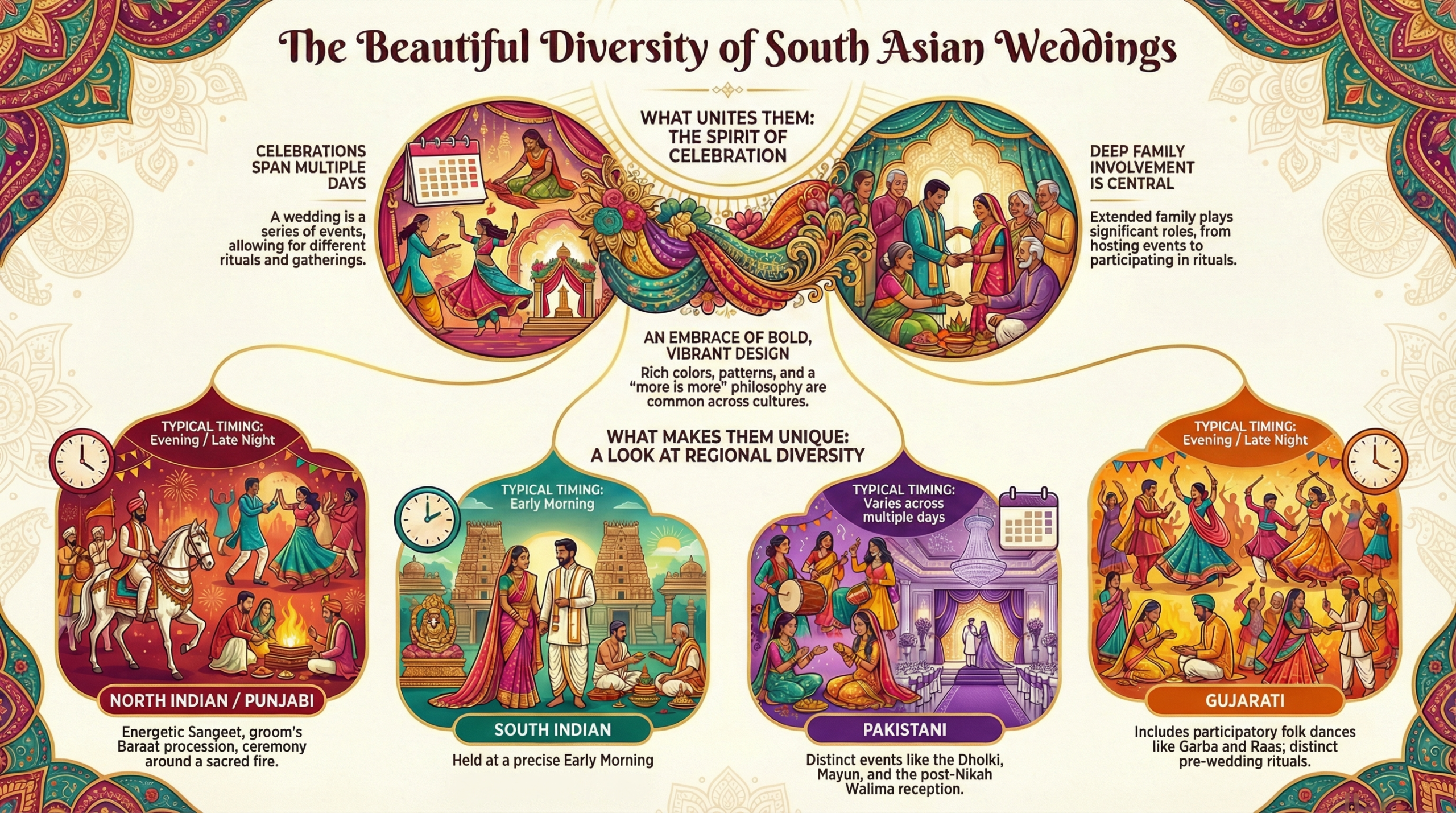
The multi-day structure is nearly universal. While the specific events vary (more on that in a minute), the concept that a wedding isn’t a single ceremony but rather a series of celebrations spanning several days remains consistent. This isn’t just tradition for tradition’s sake. These extended celebrations serve real purposes: they give families time to perform different rituals, they allow for varied types of gathering (intimate versus large-scale), and they create natural progression in the emotional arc of the wedding.
Bold, vibrant design choices transcend regional boundaries. Whether we’re designing for a North Indian Sikh wedding or a South Indian Hindu ceremony, there’s an embrace of color, pattern, and visual richness that distinguishes South Asian celebrations from many Western weddings. The specific colors might vary by culture and ceremony, but the overall philosophy of “more is more” when it comes to visual impact remains fairly consistent.
Music and dance aren’t background entertainment – they’re central to the celebration itself. The Sangeet (literally “music”) has become a standard pre-wedding event across many South Asian cultures specifically because performance and participation through music and dance are fundamental to how these communities celebrate.
Food represents hospitality and cultural expression in ways that go beyond typical wedding catering. The variety, the abundance, the specific regional dishes chosen all communicate important messages about family heritage and the value placed on guests’ experience.
Family involvement operates on a different scale than most Western weddings. It’s not just the couple’s parents who are deeply involved. Extended family members often have specific roles in various rituals, aunts and uncles may host pre-wedding events, and the guest list frequently includes entire family networks rather than just close relatives and friends.
Where Regional and Religious Differences Emerge
This is where it gets interesting, because the variations are substantial enough that what works perfectly for one family might be completely wrong for another.
 North Indian and Punjabi weddings are probably what most Americans picture when they think “Indian wedding.” The Mehndi ceremony where intricate henna designs are applied, the energetic Sangeet with choreographed performances, the Baraat (groom’s procession), and the ceremony itself with the sacred fire and seven circles around it. These weddings typically happen in the evening and run late into the night. According to the Smithsonian’s Asian Pacific American Center, North Indian wedding traditions have been particularly influential in shaping American perceptions of South Asian celebrations due to their prevalence in Bollywood films and their visibility in diaspora communities.
South Indian weddings follow a distinctly different structure. Traditional South Indian ceremonies often happen in the morning (yes, like 8 or 9 AM ceremony start times), they’re typically shorter in duration, and the rituals themselves differ significantly from North Indian traditions. The concept of the Muhurtham (auspicious time) is calculated very precisely, and families may stick to traditional timing even if it means an early morning celebration. Design-wise, South Indian weddings often incorporate more traditional temple aesthetics, specific flower choices like jasmine that carry cultural significance, and color palettes that may lean toward more traditional combinations.
 Gujarati weddings bring their own distinct flavor, literally. Pre-wedding events like the Grah Shanti and Mandap Mahurat have specific significance. The Garba and Raas during the Sangeet aren’t just performances but participatory folk dances with deep cultural roots in Gujarat. Even the food at Gujarati weddings has a distinctive style that guests familiar with North Indian or South Indian cuisine will immediately recognize as different.
 Pakistani weddings share some similarities with North Indian Muslim weddings but have evolved their own traditions. The Dholki (musical gathering), Mayun (turmeric ceremony), and Mehndi all have Pakistani-specific variations. The Walima reception following the Nikah ceremony is a significant event. Design elements often incorporate traditional Pakistani aesthetics that, while similar to North Indian styles in some ways, have their own distinct character.
Bengali weddings from West Bengal and Bangladesh include unique rituals like the Gaye Holud (similar to Haldi but with its own specific traditions), Dodhi Mangal, and Bou Bhaat. Even the timing and structure of the actual wedding ceremony differs from other Indian traditions.
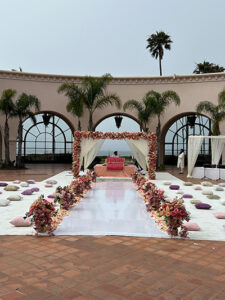 And that’s before we even get into religious differences. Hindu ceremonies center around the sacred fire and involve specific Sanskrit mantras and rituals. Sikh weddings take place in the Gurdwara (temple) around the Guru Granth Sahib with the Anand Karaj ceremony being distinctly different in structure. Muslim Nikah ceremonies are often shorter and have completely different rituals, though the surrounding celebrations may span multiple days with events like Mehndi and Walima.
How Culture Influences Design Choices
These cultural differences aren’t just about which rituals happen when. They fundamentally influence design decisions in ways that matter.
Color significance varies dramatically across cultures. Red is auspicious in many North Indian Hindu traditions, but a Bengali bride might wear a very specific shade of red and white combination. South Indian brides often wear silk saris in colors like red, orange, or even green depending on regional customs. Pakistani and Muslim brides might favor red, but the specific shade and how it’s combined with gold embroidery follows different aesthetic traditions. Some Sikh families embrace vibrant pinks and oranges, while others prefer more traditional reds and golds.
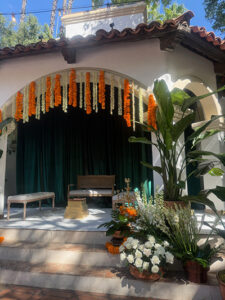
Floral choices carry cultural weight too. Marigolds are ubiquitous in North Indian celebrations for their auspicious significance and vibrant color. South Indian weddings often feature jasmine heavily, both in personal adornment and in decor. Different regions have traditional flowers associated with weddings, and families often feel strongly about incorporating these specific blooms even when working within Southern California’s climate and availability.
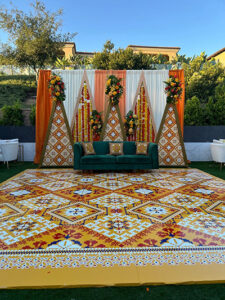
Stage and mandap design reflects cultural aesthetics in subtle but important ways. A traditional South Indian mandap might incorporate more temple-inspired architectural elements. A Punjabi Hindu mandap could lean toward more ornate, decorative styles. A Pakistani stage design might incorporate different color combinations and decorative motifs that reflect Pakistani rather than Indian design traditions.
Even fabric and draping choices connect to cultural traditions. The specific way fabrics are draped, the types of textiles chosen, and how they’re incorporated into the overall design often reference traditional garment styles and textile traditions from different regions.
Here’s where it gets really interesting though: increasingly, we’re designing for couples who are blending multiple South Asian cultures. A Gujarati bride marrying a Punjabi groom. A Pakistani Muslim family and a North Indian Hindu family coming together. These blended celebrations require understanding not just each culture’s traditions but how to respectfully incorporate elements from both in ways that feel authentic rather than tokenistic.
The Southern California Context
Orange County and the broader Los Angeles area have substantial and diverse South Asian communities. Areas like Artesia (Little India), Cerritos, Diamond Bar, and parts of Orange County have significant populations from different South Asian backgrounds, which means venues and vendors in this region have more exposure to these celebrations than you’d find in many other parts of the country.
But that exposure doesn’t automatically translate to understanding. A venue that’s hosted 50 North Indian weddings might not understand the timing needs of a traditional South Indian morning ceremony. A vendor familiar with Punjabi celebrations might not know the specific requirements for a Bengali wedding.
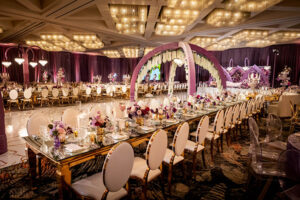
The venues themselves present interesting challenges and opportunities. Hotel ballrooms, which are enormously popular for South Asian weddings in Southern California, offer climate control and logistical convenience but require substantial design intervention to feel culturally appropriate. Historic estates and gardens provide beautiful backdrops but may have restrictions that conflict with traditional celebration needs. Temple venues obviously work well for religious ceremonies but may have limitations for the larger social celebrations.
Timeline expectations differ too. Most American venues are used to events that run roughly 5-6 hours. South Asian celebrations might need access for 8-10 hours or more, especially if you’re doing a traditional morning ceremony followed by an evening reception, or if you’re incorporating multiple religious ceremonies for an interfaith couple.
Working with Teams Who Understand the Nuances
This is where the vendor team composition becomes really important. The reality is that South Asian weddings, with their cultural complexity and logistical demands, typically benefit from having specialists involved.
Many families work with wedding planners who specialize in South Asian celebrations. These planners understand the specific needs, they know which vendors have experience with these events, and they can navigate the cultural expectations alongside the logistical realities of American venues. The planner’s role becomes about coordinating all the moving pieces, managing timeline across multiple events, and ensuring cultural traditions are honored properly.
The design and decor team’s role is different but equally important. That’s where we come in. At 2Create Designs, we focus specifically on the visual and aesthetic elements: the mandap or stage design, the floral installations, the draping and fabric, the lighting, the rental furniture and equipment. We’re not coordinating your vendors or managing your timeline (that’s what your planner does), but we are making sure the design honors your specific cultural traditions while creating that wow factor that makes people stop and stare.
The key is collaboration between the planning team and the design team. The planner knows what needs to happen and when. We know how to make it look spectacular while respecting cultural significance. When those roles work together smoothly, you get celebrations that are both logistically sound and visually stunning.
When you’re evaluating potential design teams for your South Asian wedding, there are specific questions worth asking: Have they designed for your specific regional/cultural background before? Can they show you examples of celebrations similar to yours? Do they understand the difference between various South Asian traditions, or do they treat everything as generically “Indian”? How do they approach blended cultural celebrations? What’s their process for learning about traditions they might not be familiar with?
Cultural competence doesn’t mean a design team needs to have done 100 weddings from your exact background. But it does mean they should demonstrate willingness to learn, ask questions rather than making assumptions, and show respect for the significance behind aesthetic choices rather than treating cultural elements as purely decorative.
Moving Past the Misconceptions
Let’s address a few persistent misconceptions we encounter regularly:
“All Indian weddings are basically the same.” If this entire post hasn’t made it clear, no. The diversity within South Asian celebrations is enormous, and that diversity matters to families who are trying to honor their specific heritage.
“Traditional means outdated or boring.” Some of the most stunning weddings we’ve designed have been deeply traditional in their cultural elements while being completely contemporary in aesthetic execution. Honoring tradition doesn’t mean you’re stuck with your grandmother’s exact wedding look. It means understanding what elements carry significance and finding ways to incorporate them that feel authentic to you.
“You can’t successfully blend different cultures.” We’ve designed beautiful weddings for interfaith couples, for couples from different South Asian regions, for families blending South Asian and Western traditions. It requires thoughtfulness and usually some compromise, but it’s absolutely possible to create celebrations that honor multiple heritages respectfully.
“Bigger is always better.” South Asian weddings are known for their scale and opulence, but that doesn’t mean every celebration needs 500 guests and a six-figure budget. We’ve designed intimate 100-person South Asian weddings that felt just as special and culturally significant as elaborate 600-person productions. The key is understanding what elements matter most to your family and investing there.
Celebrating Authentic Diversity
The beautiful thing about South Asian weddings is that they’re not monolithic. They’re wonderfully, sometimes complicatedly diverse. That diversity reflects the actual lived experience of South Asian communities, the regional variations in culture and tradition, and the ways these celebrations have evolved over time.
Finding vendors who understand that diversity, who take time to learn your specific traditions rather than making assumptions based on other South Asian weddings they’ve done, makes an enormous difference in how authentic and personal your celebration feels.
At 2Create Designs, our approach starts with asking questions and listening to answers. We want to know what traditions matter most to your family, what elements are non-negotiable, where you’re open to contemporary interpretation, and how your specific cultural background should inform design choices. Sometimes we’ve designed for that exact tradition before. Sometimes we’re learning alongside you. Either way, the goal is creating environments that honor your heritage while feeling unmistakably yours.
From our Anaheim location, we serve South Asian families across Orange County, Los Angeles, and throughout Southern California. We work alongside specialized South Asian wedding planners or directly with families, bringing design expertise and cultural sensitivity to celebrations that deserve both.
Planning your South Asian wedding and want to work with a design team that understands the nuances? Contact 2Create Designs to discuss your celebration. Whether you’re planning a traditional ceremony that honors generations of family customs or blending multiple cultural traditions into something uniquely yours, we’d love to help bring your vision to life.
Explore our wedding gallery to see how we’ve designed celebrations across different South Asian traditions, or learn more about our specialized services for Indian and South Asian wedding design.