
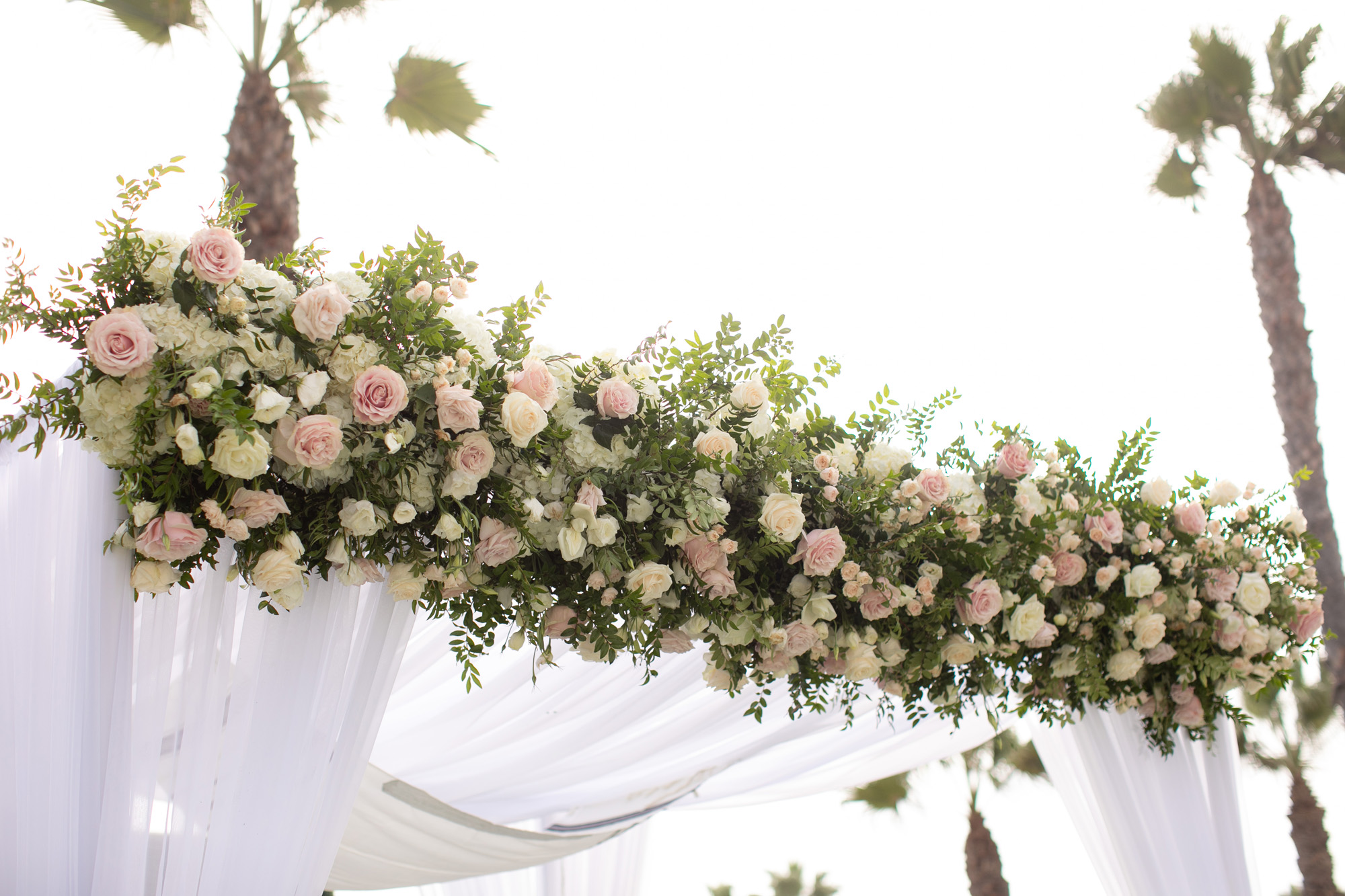
From Bouquets to Ballrooms: The Floral Story Behind a Beautifully Designed Wedding
Ask any couple six months after their wedding what they remember most about the design, and somewhere near the top of the list, you’ll hear about the flowers. Maybe it’s the bouquet they carried down the aisle. Maybe it’s walking into the reception and seeing the centerpieces for the first time. Maybe it’s a specific moment where the ceremony backdrop took their breath away. Flowers do something to a space that nothing else quite manages.
And here’s what we’ve learned over years of designing weddings throughout Southern California: florals aren’t just one element of your event design. They’re often the element that holds everything else together. Your color palette runs through them. Your style — whether that’s modern minimalism, garden romance, or something dramatic and bold — is expressed through them. Your venue is transformed by them. They’re the thread that connects ceremony to cocktail hour to reception, making the entire day feel like one cohesive experience rather than three separate events.
At 2Create Designs, we think about florals as a foundational design layer, not a finishing touch. And the difference shows.
Why Florals Should Be Part of Your Design Conversation From Day One
A common mistake we see couples make is treating flowers as something you figure out after the venue, dress, and color palette are all locked in. By that point, your floral options are constrained by decisions that didn’t fully account for what flowers could (or couldn’t) do.
When florals are integrated into the broader design conversation early, everything works better. The bouquet complements the dress instead of fighting with it. The ceremony installation works with the venue’s architecture instead of awkwardly competing with it. The centerpieces relate to the linen and lighting choices in a way that feels intentional rather than coincidental.
This is part of why we offer integrated custom event florals as part of our full-service event design rather than treating them as a standalone add-on. The floral team and the design team aren’t separate departments passing instructions back and forth. We’re working through the entire vision together from the first consultation.
For a deeper look at our philosophy on fresh flowers and what they bring to events, we covered a lot of that ground in our previous post on the real story behind event florals. This post is more about the practical side: what florals does a wedding actually need, and how do they fit into the bigger design picture?
The Ceremony: Setting the Emotional Tone
Your ceremony is short. The reception is hours long. But your ceremony florals carry an outsized share of the design weight because that’s the moment everyone is paying full attention. Phones are away. Conversations stop. People are looking at one focal point.
That focal point — whether it’s an arch, a mandap, a chuppah, an altar setup, or simply a designated ceremony space — needs to hold up to that level of attention. It needs to photograph beautifully from multiple angles because every guest with a camera is documenting it. And it needs to express the emotional tone of the moment, whether that’s romantic and soft, dramatic and bold, traditional and reverent, or something completely your own.
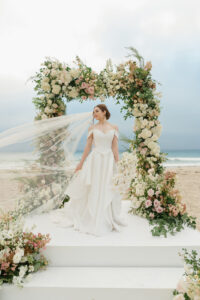
Ceremony floral elements typically include the main structure or backdrop, aisle decor (which can range from simple petals to elaborate floral markers on every chair), and sometimes pew or row arrangements. For South Asian weddings, mandap designs become some of the most significant floral projects we work on, with intricate canopy designs, dramatic floral pillars, and elaborate stage florals that frame the entire ceremony.
The other consideration here is that ceremony florals often need to be repurposed for the reception. A beautiful ceremony arch can become a backdrop for the sweetheart table. Aisle arrangements can transition to bar accents. Smart design planning identifies these opportunities early so you’re getting maximum value from every floral investment.
Personal Florals: Bouquets, Boutonnieres, and Beyond
Personal florals are the pieces that touch people directly. The bride’s bouquet. Bridesmaid bouquets. Boutonnieres for the groom, groomsmen, fathers, and grandfathers. Corsages for mothers, grandmothers, and sometimes additional family members. Flower crowns or hair florals if those fit the aesthetic. Flower girl arrangements, whether that’s a small bouquet, petals to scatter, or a floral basket.
These aren’t afterthoughts. They’re some of the most photographed floral elements of the entire wedding because they appear in every getting-ready photo, every first-look shot, every portrait, every family photo. The bride’s bouquet alone probably appears in more wedding photos than any other single element of the day.
Personal florals also need to function. A bouquet that’s too heavy becomes a problem during a long ceremony. Boutonnieres need to attach properly and stay attached through hugs, dancing, and hours of wear. Hair florals need to actually stay in hair. The aesthetic matters, but the practical engineering matters just as much.
Color and style choices here ripple outward into the rest of the design. The bouquet often sets the tone for what the reception florals will look like. The boutonnieres establish the supporting color story. These small pieces are worth significant design attention because they punch above their weight visually and emotionally.
The Reception: Where Florals Do the Heaviest Lifting
Reception florals typically account for the largest share of any wedding’s flower budget, and for good reason. The reception is where guests spend most of their time, where the most photos happen, and where the design has to function across multiple zones throughout the evening.
Let’s walk through what a fully designed reception actually involves from a floral perspective.
Entry installations set the tone the moment guests walk in. This might be a dramatic floral arch over the entrance, a styled welcome table with arrangements and signage, or a more immersive installation that signals “you’ve arrived somewhere special.” Entry florals are some of the most powerful in terms of impact because they create the first impression of the entire reception space.
Centerpieces are what most people picture when they think of reception flowers. But there’s enormous variation in what centerpieces can be. Tall arrangements that create vertical drama and draw the eye upward. Low and lush designs that don’t interfere with cross-table conversation. Mixed-height clusters that create movement across the table. Single statement blooms in elegant vessels for a minimalist approach. Floating florals on mirror or glass surfaces. Garlands running the length of long farm tables instead of discrete arrangements.
The centerpiece choice has to relate to the table style, the linens, the room’s scale, and the overall design vision. Tall arrangements look stunning in ballrooms with high ceilings but feel oppressive in lower-ceilinged spaces. Low arrangements work beautifully for intimate settings but can disappear visually in a large room.
Head table or sweetheart table florals deserve special attention because that’s where the couple will spend a significant portion of the reception. The arrangement directly in front of the couple becomes the backdrop for every photo taken during dinner, every speech, every toast. It needs to be visually substantial enough to anchor the space without blocking sightlines or making the couple feel walled in.
Bar arrangements are easy to overlook but high-impact. People congregate at bars. They take photos at bars. A well-styled bar with floral accents creates one of the most photographed corners of any reception. The same principle applies to dessert tables, escort card displays, and any other guest gathering point.
Cake florals are a small but meaningful detail. Fresh florals integrated with the cake design create a moment that’s beautiful in person and stunning in photos. Whether it’s cascading blooms down the tiers or a simple cluster at the top, this is one of those details that elevates the entire dessert presentation.
How Florals Connect to Your Overall Event Design
Here’s where having an integrated design team makes a real difference versus working with a florist who only handles flowers and nothing else.
Your florals don’t exist in isolation. They sit on linens, in vessels, surrounded by candles, under specific lighting conditions, alongside furniture, against drapery, in venues with their own architectural details. Every one of those surrounding elements affects how the florals read.
Soft pink garden roses look completely different on a champagne linen with warm candlelight than they do on a black linen under cool white uplighting. The same is true for every color and variety. The vessel matters. The table runner matters. The chair style matters. The lighting design matters.
When the floral design and the broader event design are developed together, all of these factors are considered at once. The color of the candles is chosen to complement the floral palette. The linens are selected to ground the arrangements appropriately. The lighting is designed to flatter the specific flowers being used. The result is a fully integrated visual experience rather than separate design elements that happen to share a space.
The Cohesion Question: Variation Without Chaos
One of the trickier design challenges in wedding florals is creating variation across all these different applications without losing cohesion. The bouquet, the ceremony arch, the entry installation, the centerpieces, the bar arrangements, the cake florals — these all need to feel like they belong to the same wedding without being literal copies of each other.
That cohesion is achieved through shared palette, shared style sensibility, and shared design language, even when the specific arrangements vary significantly. A wedding might have dramatic tall centerpieces on some tables and lush low arrangements on others. The flower varieties might overlap but not be identical. The ceremony installation might be the boldest moment of the day, with reception florals echoing that boldness in scaled-down ways throughout the space.
Pulling this off requires thinking about the entire event as a single design system from the beginning. Which is, again, why we approach florals as part of the design conversation rather than as a separate vendor relationship.
Budget Reality and Design Strategy
Florals can range from a relatively modest portion of a wedding budget to a significant investment, depending on the scale and ambition of the design. Both ends of that range can produce beautiful events. What matters is matching the floral strategy to the available budget rather than spreading resources too thin.
If your budget supports it, we love designing weddings with floral moments throughout the day — generous personal florals, dramatic ceremony installations, elaborate reception arrangements, and accent pieces in unexpected places. These are the events that become genuinely immersive floral experiences.
If your budget is more focused, the strategy shifts to identifying the highest-impact moments and investing there. Often that means a stunning ceremony focal point, a beautiful bouquet, statement centerpieces, and supporting elements that work harder rather than trying to put flowers everywhere. The result can still be incredibly beautiful — just curated rather than abundant.
The conversation about budget is part of the design conversation, not separate from it. We’d rather know upfront what we’re working with so we can design something genuinely beautiful within those parameters than try to retrofit a vision that doesn’t quite fit.
Bringing It All Together
Wedding florals are some of the most rewarding design work we do at 2Create Designs because they touch every part of the day. From the bouquet you carry to the centerpiece your guests admire at dinner, flowers create the emotional texture of your wedding in a way nothing else quite matches.
Based in Anaheim and serving couples throughout Orange County and Southern California — from Newport Beach to Los Angeles to San Diego and beyond — our floral and design teams work as one to bring every element of your wedding into beautiful alignment. We handle ceremony installations, personal florals, reception centerpieces, accent pieces, and every other floral moment as part of a fully integrated design vision.
Ready to start the conversation? Book a complimentary consultation to discuss your wedding vision. Explore our custom event florals page for more on our floral approach, or read our deeper take on why fresh flowers still matter for events. You can also browse our wedding gallery to see how florals come together with the broader design in real celebrations.